When Should My Child Start Piano Lessons? A Honolulu Teacher's Honest Guide
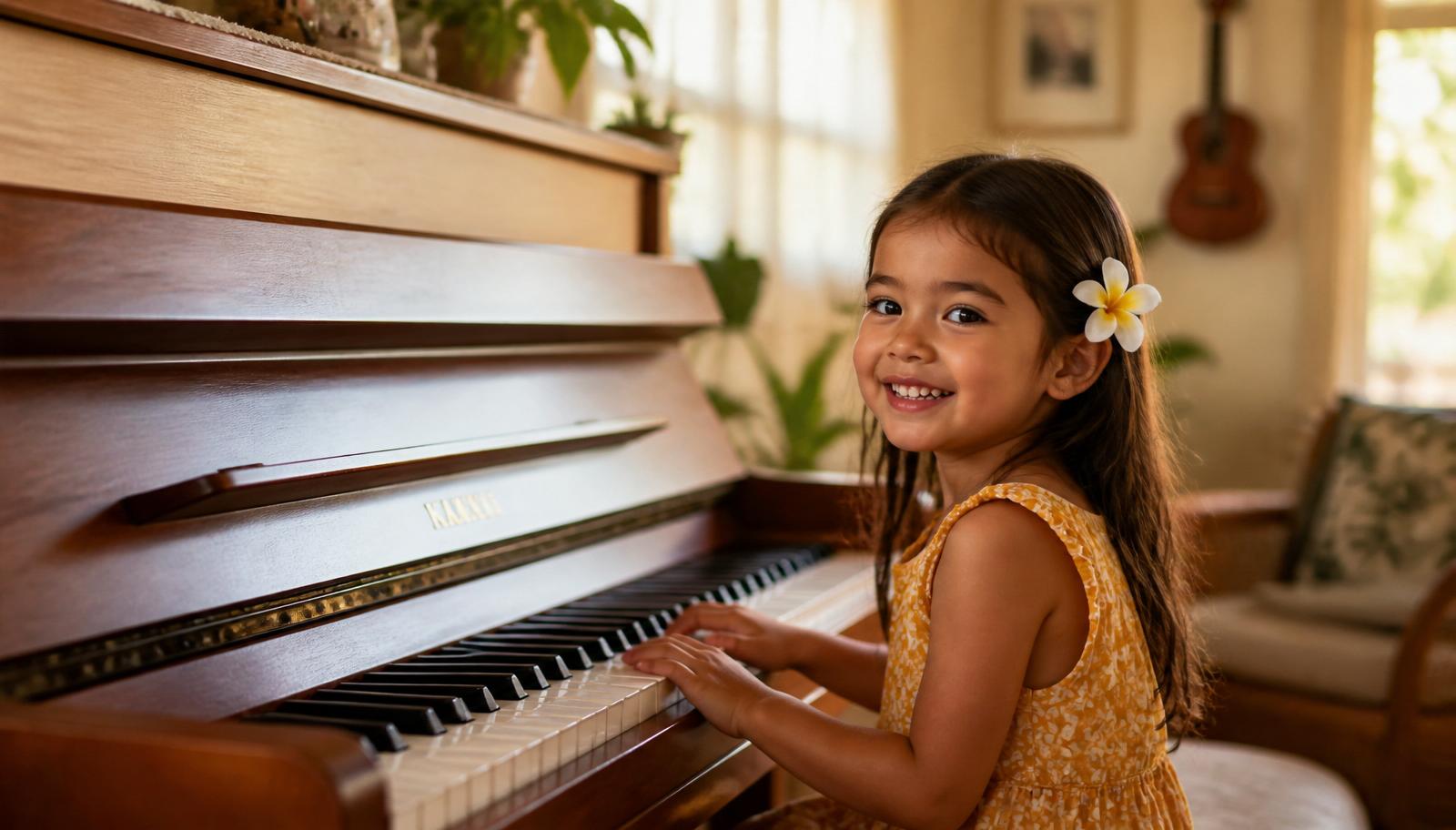
"What age should my kid start piano?" is the question I hear most from Honolulu and Ewa Beach parents, usually followed by "…and did we already miss the window?" After 15+ years of teaching kids across Oahu, I can tell you there isn’t a magic age. There are signs to watch for, and a few good reasons to wait.
The short version
Most kids are ready for real lessons somewhere between ages 5 and 7. Some are ready at 4. Some aren't ready until 8. Starting older is not a disadvantage; it often speeds things up. What matters more than birthday candles is whether they can sit, focus, and follow a two step instruction.
Ages 3–5: Play, not lessons
At this age, the piano bench feels huge. Fingers are still building strength, and 20 minutes of structured attention is a lot. I don't usually recommend formal weekly lessons for most 3–4 year olds. What I do recommend:
- Put a keyboard somewhere they can reach it and let them explore.
- Sing simple songs and clap rhythms the ear develops before the fingers.
- Watch how they respond. Are they drawn back to it? That's your green light.
For a 5 year old who can already sit through a bedtime story and follow a recipe with you, a 20-minute lesson is usually doable. That's my most common "yes, let's start" age. One Kailua student of mine hit that mark right after kindergarten and couldn’t wait to show grandma “Hot Cross Buns” over FaceTime.
Ages 6–8: Strong years to begin
This is when most students click into lessons quickly. They can read (which helps a lot with note names), count to at least twenty, and follow multi-step instructions. Their hands are big enough to reach an octave or close to it within a year or two.
Expect the first six months to cover:
- Finding notes on the keyboard and matching them to the staff.
- Basic rhythm: quarter notes, half notes, whole notes.
- Playing hands separately, then slowly hands together.
- Two or three real pieces they can play for family.
Ages 9–12: Faster than you'd think
Parents often assume older kids have "missed it." They haven't. A 10-year-old who wants to be there will typically move through the same first-year material in half the time a 5-year-old does, because they read fluently, count fractions, and self-correct. Many of my strongest students started between 9 and 12.
Teens and adults
I teach teens and adults regularly, including complete beginners and people picking it back up after 20+ years. The main thing to know: adult brains are excellent at understanding music theory but slower to build muscle memory. That just means daily short practice beats one long weekend session. It's absolutely not too late.
Signs your child is actually ready
- They can sit still and focused for at least 15 minutes on something they choose.
- They can follow a two-step instruction ("stand up and get your shoes").
- They recognize letters A through G, or are close.
- They ask about the piano, tap out rhythms, or sing songs on their own.
- You the parent can commit to sitting with them for short home practice, at least early on.
Signs to wait a few months
- Constant meltdowns during other structured activities (soccer, ballet, storytime).
- Zero interest in music at home the parent wants it, the child doesn't.
- No consistent time in the week to practice. This is the biggest quiet reason kids quit.
What a first lesson actually looks like
For a new 6-year-old, our first 20 minutes is mostly getting comfortable: where does middle C live, what does a good hand shape feel like, and can we play a two note song by the end? I send parents home with a short daily practice plan usually 10 minutes and a note on what to watch for during the week. On rainy Manoa afternoons we keep it cozy, listen for steady beats, and celebrate tiny wins.
For an older student or an adult, we spend more of the first lesson talking about goals. Someone who wants to play worship songs, someone prepping for a recital, and someone who just wants to unwind after work all need different paths, and it's easier to set that in lesson one.
Home setup on Oahu
You don't need an acoustic piano to start. A digital piano with 88 weighted keys and a sustain pedal is enough for the first several years, and it's kinder to condo neighbors and Hawaii's humidity. If you're weighing options, I wrote a separate piece on acoustic vs digital piano for beginners with specific models at different budgets.
Ready when you are
Every family's timing is different. If your kid is 5 and you're wondering, it's usually worth a trial lesson to see how they respond in the room. If they're 11 and just now interested perfect, come in. See current lesson plans or reach out with questions.
Frequently asked questions
Is 4 too young for piano lessons?
For most 4-year-olds, yes — attention span and hand strength usually aren't there yet. A better fit at that age is short music-play sessions at home. Formal lessons tend to click somewhere between 5 and 7.
Is my child too old to start?
No. Students who start at 10, 12, or even in high school routinely make faster progress than very young beginners because they can read, count, and self-correct. The instrument doesn't care how old you are.
Do I need to buy a piano before the first lesson?
A weighted-key 88-key digital piano is enough to start. You do need something at home — practicing only during the weekly lesson isn't enough to build habits.
How long are lessons for beginners?
At Piano Time with Miho, lessons are 20 minutes, once a week. That's the right length for young beginners to stay focused and leave wanting more.